Date:2026-11-14
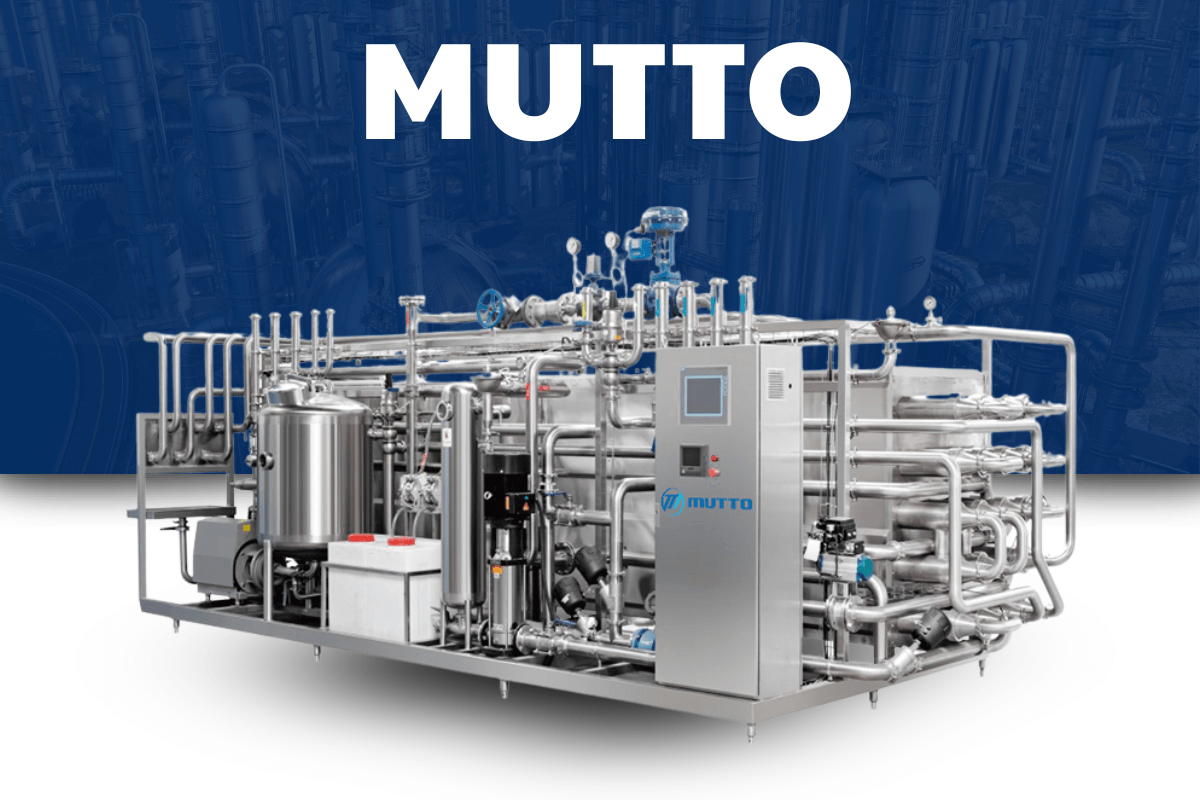
A UHT sterilizer treats liquid food by heating it to a high temperature for a short time, then cooling it quickly. The process has four stages: feeding, heating, holding and cooling. The system tightly controls temperature, holding time and flow rate to deal with microorganisms while limiting the impact on product quality. The UHT method is based on raising the temperature quickly, holding it for a defined period, then cooling immediately afterward. UHT stands for Ultra High Temperature, meaning treatment at an ultra-high temperature. Compared with prolonged heating, this method shortens the time the product is exposed to heat, helping it better retain its flavor, color and nutritional value. The treatment temperature is not the same for every raw material. Milk, fruit juice, tea, nutritional drinks and sauces differ in composition, acidity and physical properties. For this reason, each product needs its own suitable heat treatment profile. For the Mutto tubular UHT sterilizer, the typical operating temperature is 95–125°C, with a maximum of 138°C. The system is configured according to the raw material characteristics and the treatment requirements of each production line. The UHT sterilization process consists of four consecutive stages, from feeding the raw material to cooling the product after heat treatment, and takes place in a closed system to control the flow and treatment conditions. Step 1: Feeding the raw material A pump delivers the raw material into the system at a stable flow rate, so that the residence time in the following stages always matches the set values. Step 2: Heating The machine raises the product to the set treatment temperature. Depending on the configuration, heat is transferred either directly through steam or indirectly through a heat exchange surface. The heating method affects the equipment design and how the product is cooled. Step 3: Holding Once the required temperature is reached, the product passes through the holding tube. Here, the product stays at that temperature for a defined period to achieve effective microbial treatment. This is the stage where temperature and holding time must be controlled together. If the product has not met the treatment conditions, a diversion valve sends the product flow back into the system instead of letting it move on. Step 4: Cooling The machine cools the treated product down to the set outlet temperature. In an indirect heat exchange system, heat from the hot product can warm the incoming raw material, reducing the need for additional heat input. In addition to the four main stages, a UHT sterilizer also uses two supporting processes for hygiene and microbial control. CIP (Cleaning In Place) cleans the pipes and product-contact surfaces in place. SIP (Sterilization In Place) sterilizes the equipment before it goes into production. Direct and indirect heating differ in how heat is transferred from the heating medium to the product. A UHT sterilization system uses one of these two methods, depending on the raw material characteristics and process requirements. Because condensed steam increases the water content of the product, a direct heating system usually uses a vacuum chamber to cool the product quickly and remove the added water. An indirect heating system cools the product through the heat exchanger. Both methods can meet UHT sterilization requirements when properly designed and operated. The composition, viscosity and heat sensitivity of the raw material, together with the quality requirements for the finished product, determine which method is suitable. Mutto offers UHT sterilization solutions with both direct and indirect heating. Among them, the tubular UHT sterilizer line uses indirect heating. The components work in a chain: the pump feeds the product in, the heat exchanger and holding unit carry out the heat treatment, and the sensors and PLC keep the parameters within the set limits. Depending on the heating method, the machine configuration includes additional specialized components, such as the direct steam supply unit and vacuum chamber in a direct heating configuration (see Section 3). The Mutto tubular UHT sterilizer uses an indirect heat exchanger: the product flows inside corrugated tubes, while the heating or cooling medium flows outside the tubes. The corrugated tube design supports heat transfer, and the whole process takes place in a closed system. Technical specifications: Note: Actual heat recovery efficiency depends on operating conditions and system configuration. The machine can be used in production lines for milk, fruit juice, tea, nutritional drinks and sauces. When selecting a model, Mutto evaluates the viscosity, composition and particle size of the raw material to determine a suitable heat exchange configuration. In addition, the machine integrates a CIP system for in-place cleaning and a self-sterilization function. Mutto can adjust the configuration parameters to the requirements of each production line. Learn more about the Mutto tubular UHT sterilizer for product information and equipment configuration. The system uses heat from the treated product to warm the incoming raw material, so the amount of additional heat required goes down. Actual heat recovery efficiency varies with the machine configuration and operating conditions. CIP is an in-place cleaning process that removes residue and leftover product from the pipes and product-contact surfaces. SIP is an in-place sterilization process carried out before production. The two processes serve different purposes but both support hygiene control of the production line. The system integrates CIP to clean the pipes and product-contact surfaces directly on the equipment. As a result, routine cleaning does not require disassembling the entire system. A UHT sterilizer treats liquid food through four stages: feeding, heating, holding and cooling. To achieve the required treatment, the system must control temperature, holding time and flow rate together. Mutto offers UHT sterilizer solutions with both direct and indirect heating. The tubular line has a capacity of 1,000 to 5,000 liters per hour, an integrated CIP system and a heat recovery efficiency of up to 40%. Contact Mutto for advice on a configuration that fits your raw materials and production scale.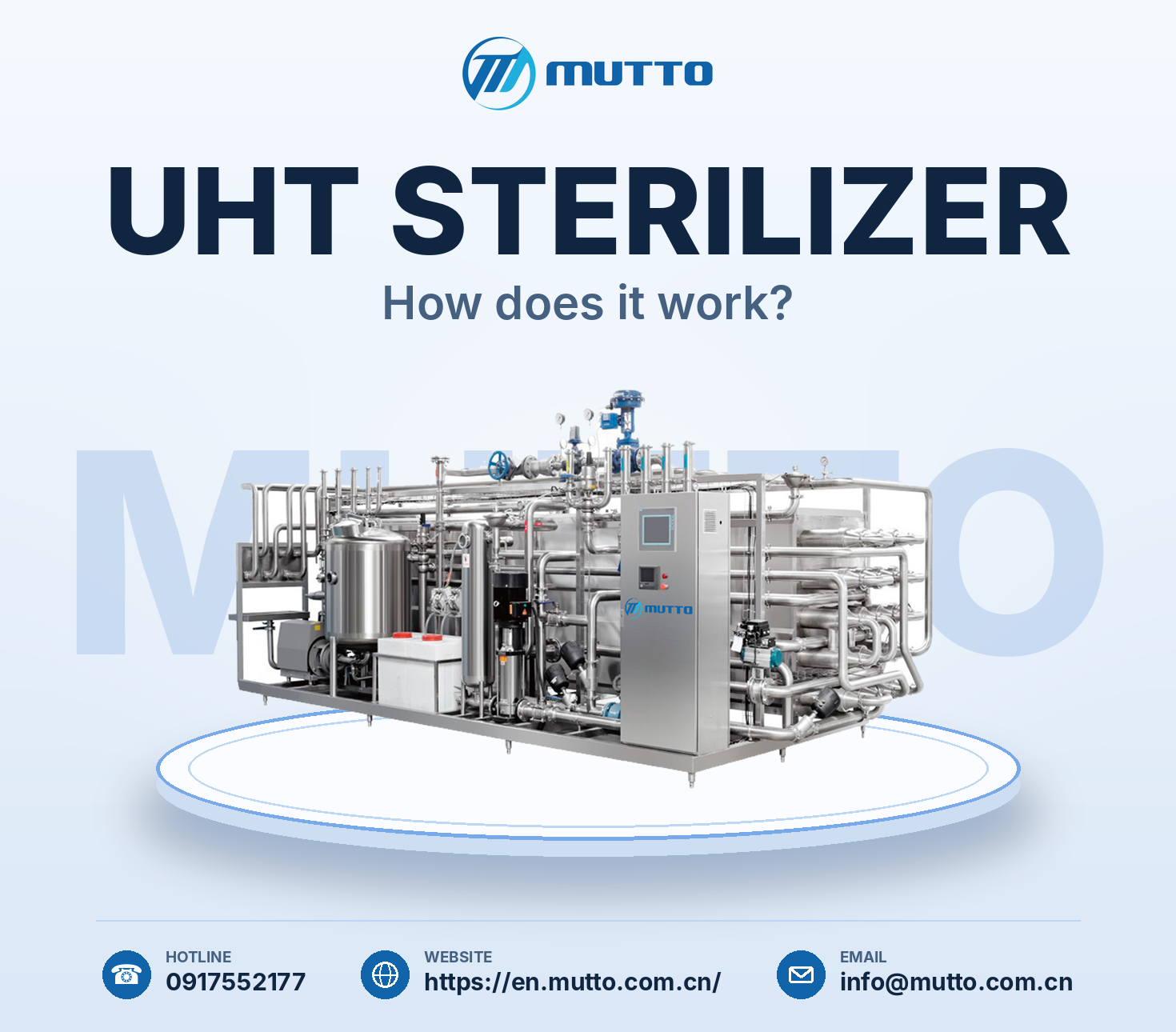
1. Working Principle of a UHT Sterilizer
2. What Steps Does a UHT Sterilizer Go Through?
3. How Do Direct and Indirect Heating Differ in a UHT Sterilizer?
4. What Are the Main Components of a UHT Sterilizer?
5. Specifications of the Mutto Tubular UHT Sterilizer
Frequently Asked Questions About UHT Sterilizers
What does a heat recovery efficiency of up to 40% mean?
What is the difference between SIP and CIP in a UHT sterilizer?
Does the Mutto tubular UHT sterilizer need to be disassembled for cleaning?
Conclusion
MUTTO (VIETNAM) MACHINERY EQUIPMENT COMPANY LIMITED Address: 26-28-30 Street No. 7, Conic Residential Area, Hamlet 5, Binh Hung Commune, Ho Chi Minh City, Vietnam Hotline: (+84) 917552177 Email: info@mutto.com.cn Website: https://en.mutto.com.cn/ Facebook: https://www.facebook.com/MuttoFillingSolution/ Instagram: https://www.instagram.com/muttofillingsolution/ LinkedIn: https://www.linkedin.com/company/mutto-filling-solution/

Mainland China Region: Add:Building 6, No. 314 Shenxia Road, Jiading District, Shanghai
Tel:021-69896938
Vietnam Office: Add:26-28-30 Street No.7, Conic Residential, HoChiMinh City , VietNam
Tel:+84 917552177
Email: Email:info@mutto.com.cn
版权所有@2026牧东机械制造(上海)有限公司技术支持:撼云网络
 CN
 EN
 VI