Date:2026-11-06
Filling and packaging line productivity depends on product characteristics, machine configuration, packaging, equipment synchronization, auxiliary equipment, and operating procedures. Understanding these six factors helps factories identify the causes of reduced output and select more suitable equipment.
Actual production output is often lower than designed capacity due to machine downtime, operating speeds below the designed rate, and defective products.
Illustrative example: A production line has a designed capacity of 60 bottles per minute and operates for an 8-hour shift. Its theoretical output is 28,800 bottles. If the line stops for 60 minutes, operates at only 80% of its designed speed, and has a 5% defect rate, the final output is approximately 19,152 bottles.
These production losses can originate from the following six factors.
Products with high viscosity, a tendency to foam, or solid particles often require different filling methods and machine configurations.
Several product characteristics need to be considered:
Viscosity: Thicker products generally require longer filling times or a suitable pumping system.
Foaming tendency: Foam can affect filling accuracy and increase processing time.
Solid content: Products containing particles require an appropriate filling mechanism to minimize clogging.
Temperature: Hot-fill products require equipment that can withstand the operating temperature and support the corresponding cooling process.
When selecting a machine, you should provide product samples and information about the actual product. Test results using water cannot fully represent the filling process for products with different viscosities or characteristics.
The number of filling nozzles, dosing method, and machine design determine how much product the machine can process in each cycle.
Depending on the characteristics of the product, machines may use volumetric filling, weight-based filling, piston filling, or pump-based filling. Each method has its own operating principle and application range.
The number of filling nozzles must also be calculated according to the target production output. Increasing the number of nozzles does not automatically increase the output of the entire line if downstream equipment cannot process the resulting product volume in time.
Inconsistent bottles, caps, pouches, and packaging films can cause machines to stop frequently to resolve errors.
For example, bottles with inconsistent dimensions may get stuck on conveyors; incorrectly sized caps can cause capping failures; misaligned labels or uneven roll film can interrupt the packaging process.
Factories should inspect packaging dimensions, materials, and consistency before production. When problems occur, the packaging batch should be recorded to help identify the cause and prevent recurring defects.
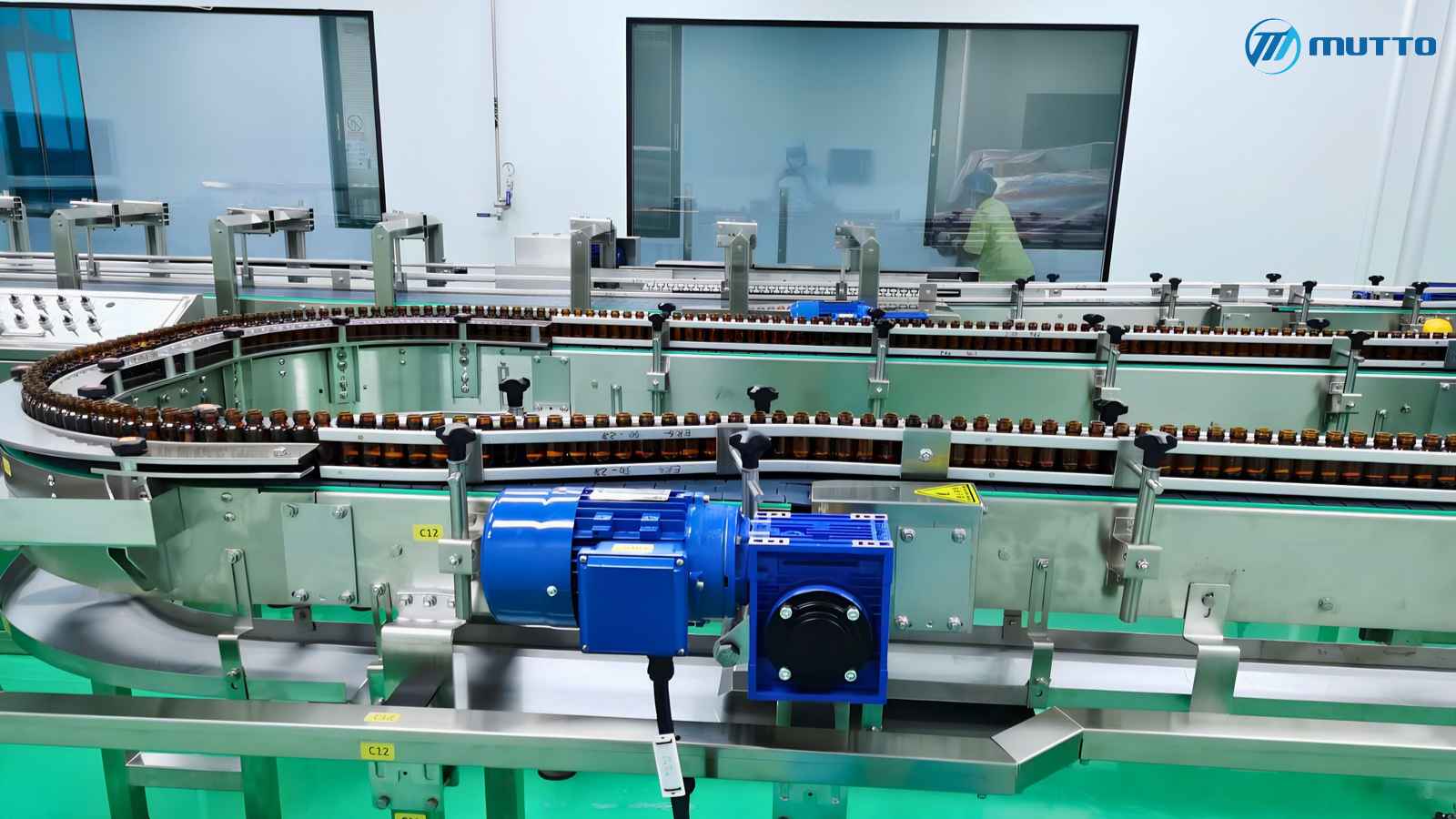
The speed of each machine must be calculated to ensure that individual production stages do not obstruct one another.
Illustrative example: A filling machine operates at 60 bottles per minute, while the labeling machine can process only 40 bottles per minute. During continuous operation, the production line's output is limited to 40 bottles per minute.
Accumulation conveyors between machines can temporarily hold products when one stage stops for a short period. However, they only help reduce the impact of brief interruptions and cannot solve the problem of one machine operating more slowly than the rest of the line.
Bottle unscramblers, conveyors, raw material tanks, and utility systems help maintain a continuous production flow.
The following components should be inspected:
Bottle unscrambler: Inconsistent bottle feeding or frequent jams can force the filling machine to wait.
Conveyors: Their speed and conveying capacity must meet the product flow requirements between production stages.
Raw material tanks: Their capacity and material supply capabilities must meet operating requirements.
Date coding machines: Printing errors or machine stoppages can interrupt the finishing stage.
Electricity, compressed air, and water: These utilities must meet the technical requirements of the equipment throughout the production line.
A problem with the bottle unscrambler or raw material supply system can reduce the output of the entire line, even when the filling machine itself is operating normally.
Cleaning, product changeovers, and troubleshooting all reduce actual production time.
When switching to a different bottle type or product, operators may need to adjust machine parameters, replace certain components, and clean the equipment. If these procedures are not standardized, changeover time can increase.
In addition, gaskets, seals, filling nozzles, and sensors need to be inspected and maintained according to their operating conditions. Factories should save machine settings for each product and record the causes of every machine stoppage for easier monitoring.
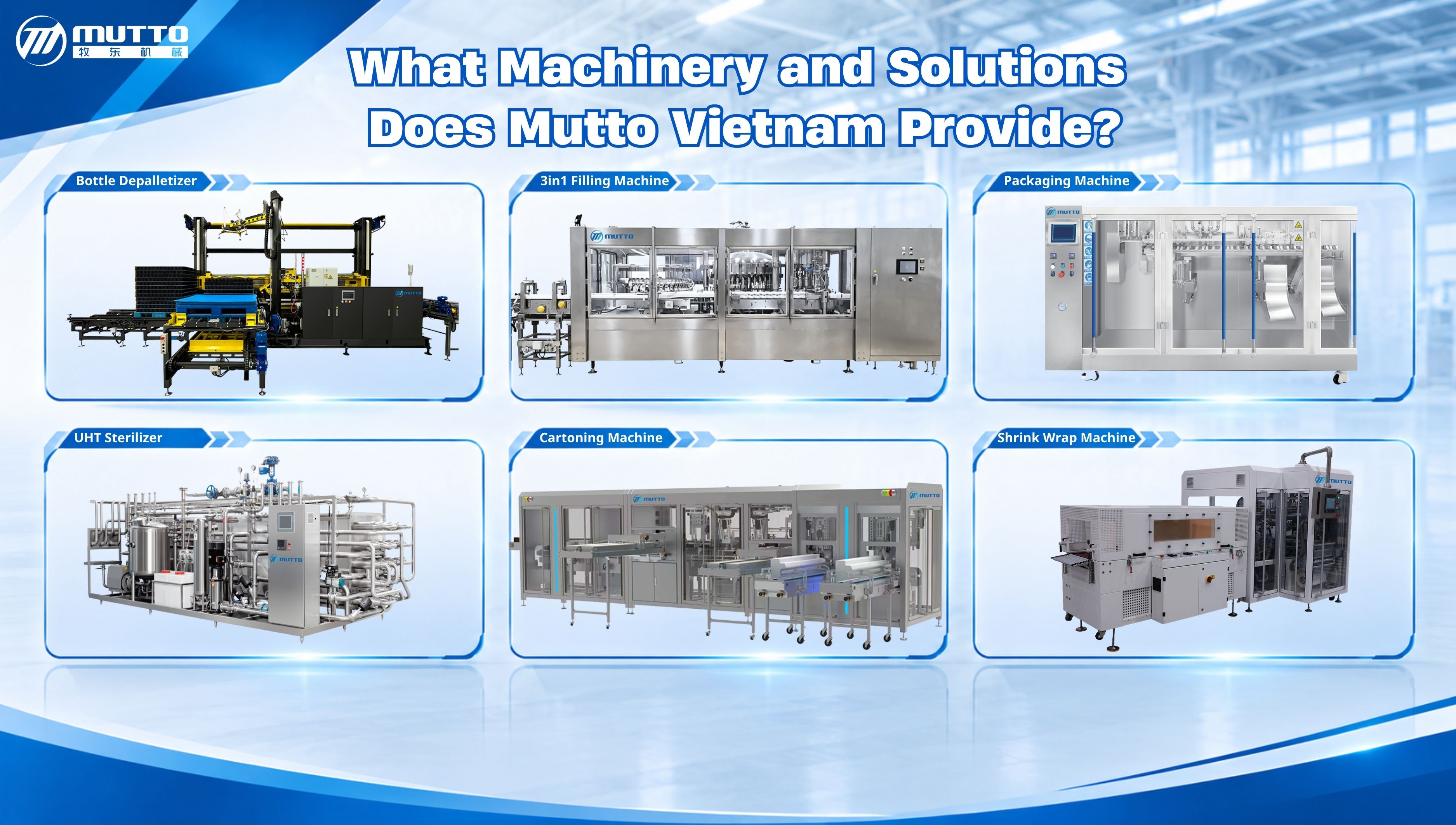
At Mutto, we provide a wide range of filling and packaging equipment, as well as production line solutions for the food and beverage industries and other related manufacturing sectors. Our technical team supports customers throughout the process, from site surveys and design to installation, operation, and training.
When recommending equipment, we consider the factors affecting productivity from the beginning:
For every project, Mutto's technical team carefully reviews product information, packaging specifications, target output, and factory layout before recommending equipment. Depending on the customer's needs, the solution may involve a standalone machine or multiple machines integrated into a complete production line.
You can identify the stage slowing down the production line by monitoring the output and downtime of each machine.
The inspection process consists of five steps:
Record production output: Track the number of qualified products produced during each shift.
Monitor downtime: Record when each machine stops, how long it remains stopped, and the cause.
Compare equipment speeds: Compare the actual output rates of the filling, capping, labeling, and packaging machines.
Identify the main cause: Prioritize the production stage that causes the greatest time loss or limits output.
Measure again: Compare the results before and after making adjustments.
This data helps factories decide whether to modify operating procedures, improve existing equipment, or invest in additional machinery.
To improve productivity, factories need to evaluate products, packaging, equipment, and operating procedures together. If you are looking for filling or packaging machines, send Mutto your product information, packaging specifications, and target production output. Our technical team will review your requirements and recommend an appropriate equipment solution.
You can also explore Mutto's product range or contact us directly to discuss your production requirements in detail.
MUTTO (VIETNAM) MACHINERY EQUIPMENT COMPANY LIMITED
Address: 26-28-30 Street No. 7, Conic Residential Area, Hamlet 5, Binh Hung Commune, Ho Chi Minh City, Vietnam
Hotline: (+84) 917552177
Email: info@mutto.com.cn
Website: https://en.mutto.com.cn/
Facebook: https://www.facebook.com/MuttoFillingSolution/
Instagram: https://www.instagram.com/muttofillingsolution/
LinkedIn: https://www.linkedin.com/company/mutto-filling-solution/
TikTok: https://www.tiktok.com/@mutto_filling_solution
YouTube: https://www.youtube.com/@MuttoFillingSolution

Mainland China Region: Add:Building 6, No. 314 Shenxia Road, Jiading District, Shanghai
Tel:021-69896938
Vietnam Office: Add:26-28-30 Street No.7, Conic Residential, HoChiMinh City , VietNam
Tel:+84 917552177
Email: Email:info@mutto.com.cn
版权所有@2026牧东机械制造(上海)有限公司技术支持:撼云网络
 CN
 EN
 VI